How AI Creatives Are Actually Landing Clients Right Now (Real Examples)
The question I get more than any other from people who can already make the work is where the paying clients actually come from. Not the theory. Where did the last one come from, specifically. So in September 2026 I asked our community exactly that, and the answers underneath the question were more useful than any framework I could give you. Here they are, first names only, and then the pattern they all share.
If you might be sitting on real skills with no pipeline, read the stories before the advice. The advice only makes sense once you have seen how ordinary the mechanism is.
A viral reel turned into a repeat TV ad client
Ivan posted content on Instagram. One reel went viral. Out of that single post he now has a repeat customer who pays him to make TV ads for lawyers, ongoing work, not a one-off. He did not pitch the client. The client found the reel, and the reel was the pitch.
A fashion brand found her through the exact images she was already posting
Jasmine's first paying client was a fashion brand that wanted hyper-realistic images for their collection and social posts. They messaged her on Instagram because she was already posting exactly that kind of image with her own AI avatar. Her point on the thread is the one worth sitting with: go where the decision maker is. For a solo founder or a small brand, the person who sees your work is the same person who can say yes. There is no gap between the audience and the buyer.
One LinkedIn post, one lead
David posted a Disney-style video on LinkedIn and a lead came in off the back of it. One post, not a campaign, not a content calendar. The work was specific enough that the right person recognised what he could do for them.
An out-of-date Behance profile still did the job
Ginger's client found an old Behance profile she had not touched in a while. Not current work. It still worked because it existed and someone went looking. That is the lowest-effort version of the pattern: have your work somewhere findable, even if you are not actively promoting it.
Just posting on Facebook
Hakon has no system and no funnel. He posts his work on Facebook, a platform most of this industry has written off, and clients come from it. Consistency on a platform you already use beats a clever strategy on one you do not.
Cold email, and LinkedIn once he put the work in
Mamad is the counter-example and worth including for that reason. All his work comes from cold email, and LinkedIn worked for him too, but only once he actually put the hours into it. Cold outreach does work. It is the hardest channel because you have to build trust from zero inside a single message, and it rewards the people who treat it as a job rather than a lottery.
A room, twice
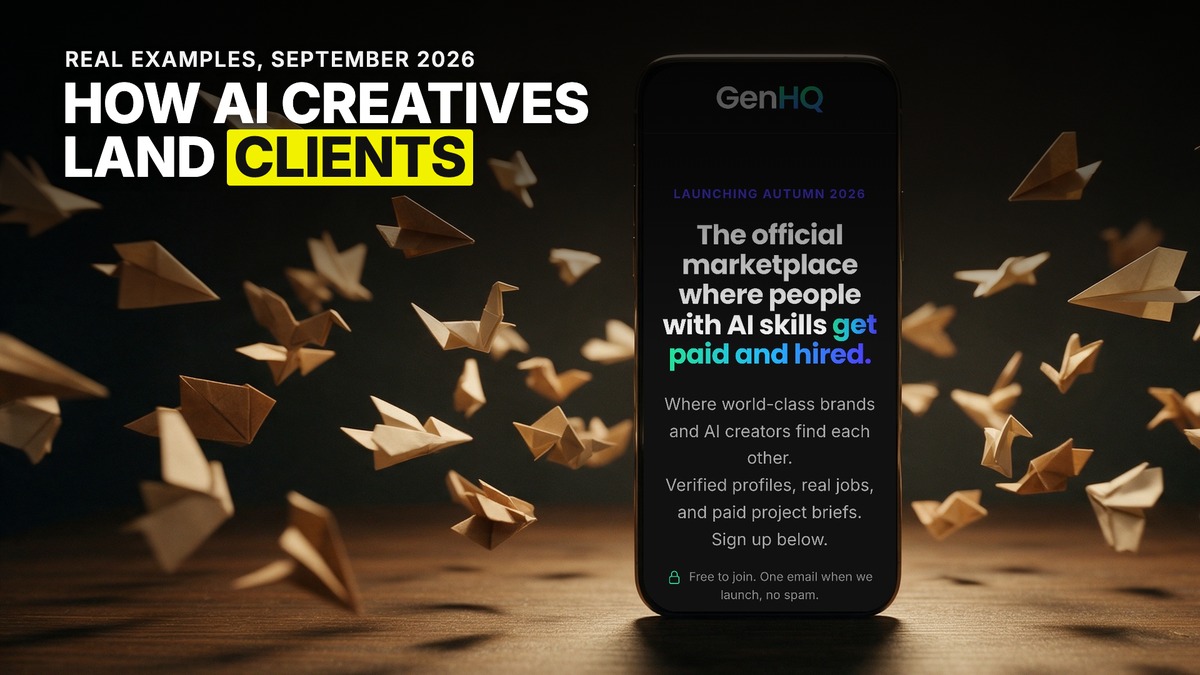
Anthony's story took the longest to pay off and it is the clearest example of all of them. He met people at a GenHQ social event and kept the relationships going afterwards. He later earned from a spec piece he posted inside the community, and separately another member vouched for him to a client, and he is now too busy to take on more work. Neither of those happened on a platform. They happened in a room and inside a community, twice.
Steve's version is shorter. A member of a business networking group hired him after he simply mentioned what he does. He was not pitching. He was in a room, talking normally, and someone in it needed exactly what he makes.
The pattern underneath all of it
Every one of those stories has the same shape. The work did the selling. Nobody talked a client into it with a clever message. The client saw something that already existed, a post, a profile, a spec piece, a person in a room mentioning their job, and the decision was mostly made before a conversation started.
Warm beats cold not because cold is broken but because warm channels carry proof with them. A referral arrives with someone else's trust attached. A viral post arrives with the work as the proof. A cold email has to build all of that inside one message, which is why Mamad's version takes real hours to make work.
And a community is a network, not just a classroom. Anthony's two wins came from the same room. Any group of people making similar work who show up regularly becomes a source of warm introductions, because people who are present long enough start vouching for each other.
What to do this week if you have zero network
Post the work you actually want to be hired to make, publicly, on whatever platform you already use, the way Ivan, Jasmine, David and Hakon did. You cannot get a referral before you have work worth referring. Then go where other people making similar work already gather, live if you can, because Anthony's two clients both started as a person in a room, not a message in an inbox. Warm does not require a network you already have. It requires putting yourself somewhere a network can start.
Common questions
Where do AI creatives get their first paying client?
Mostly from work they had already posted or shown, and from people they already knew. Referrals, a post that reached the right person, a spec piece, or a conversation at an event come up far more often than cold outreach.
Does cold outreach work for AI video and image work?
Yes, for people who treat it as a job. It is the hardest channel because the message has to carry all the trust on its own. Posting the work first makes every other channel, including cold, easier.
Which platform is best for finding AI creative clients?
The one where your buyer actually looks. Solo founders and small brands live on Instagram. Marketing directors and agencies live on LinkedIn. Post the kind of work that buyer needs, on that platform, consistently.
How do I get clients with no network at all?
Post the work you want to be hired for, publicly, and then put yourself in rooms where people making similar work gather. Both of the community clients in this post started as an in-person conversation.
Want the full method and the community that runs it every week? Join GenHQ.